

October check-in: are you on track to finish your curriculum this year? By October, the shiny new-school-year feeling has usually worn off. The new curriculum isn’t new anymore, somebody has had a cold (or three), and you may have a nagging feeling that you’re behind. Here’s the good news: October is the perfect time to check in. There’s still plenty of school year left to make small, easy adjustments, instead of panicking in April.
As a working mom homeschooling five children, I found that getting behind was a common occurrence. Often it was due to hitting a roadblock in math or science. Reconfiguring the lesson plans in my teacher planner was time-consuming, involved a lot of White-Out, and often found us finishing school in June or later, rather than May as I preferred.
1. Take a quick inventory
Grab each child’s books and answer one question for each: how many lessons are left, and how many school days are left?
Then divide: lessons left ÷ school days left = lessons per school day.
If the answer is about 1, you’re right on track: one lesson a day finishes the book. If it’s less than 1, you have breathing room. If it’s more than 1, you’ll need to double up now and then.
For example, if you’re on lesson 60 of a 150-lesson math book and you have 90 school days left, that’s 90 lessons in 90 days. One a day and you’re done. If you were on lesson 40, it’s 110 lessons in 90 days, so you’d add a second lesson on about 20 of those days.
The Lesson Garden website has a great guide that walks through more examples, including four-day weeks and page-based workbooks: How Many Lessons a Day to Finish a Curriculum on Time.
2. Figure out why you’re behind (or ahead)
Being behind isn’t a failure. It’s information. Was it a rough few weeks of sickness? A subject that’s moving too fast for your child? Too many outside activities? Or did you simply plan more than any family could actually do?
The answer tells you what to fix. A sick week just needs catching up. A curriculum that’s moving too fast needs slowing down, and that’s okay.
One time we kept falling behind, and when I realized the reason, it came as a complete surprise. I was the culprit! I had planned a lot of fun experiments and activities to go with our lessons, but many times when the day came to do that experiment or activity, I had forgotten to stock the supplies. Then I would postpone the lesson until I was able to get the needed items. Postponing too often got us weeks behind and is one of the biggest homeschooling mistakes homeschoolers make.
3. Pick a catch-up plan that fits your family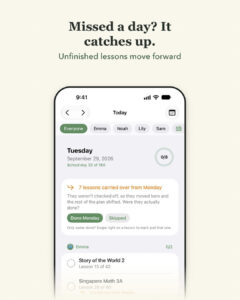

- Double up on easy lessons. Review lessons, tests, and short readings can often be done two at a time.
- Skip what they’ve already mastered. Many curricula include plenty of review. If your child clearly knows it, move on.
- Add a catch-up day. Some families do lessons four days a week and use the fifth day for whatever is furthest behind.
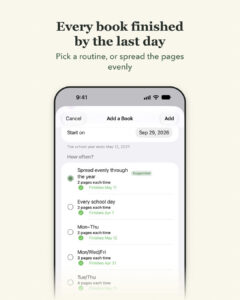
- Spread out what’s left. Instead of trying to make up every missed day, spread the remaining lessons evenly over the days you have left. A little more each day is much easier than a crash week.
- Finish over the summer, or pick up next year right where you left off. Lots of families do! Doing school in the summer prevents summer slide and gives the kids something productive to do each day.
4. Protect the core subjects
5. Leave a cushion for the rest of the year
 A tool that does the math for you

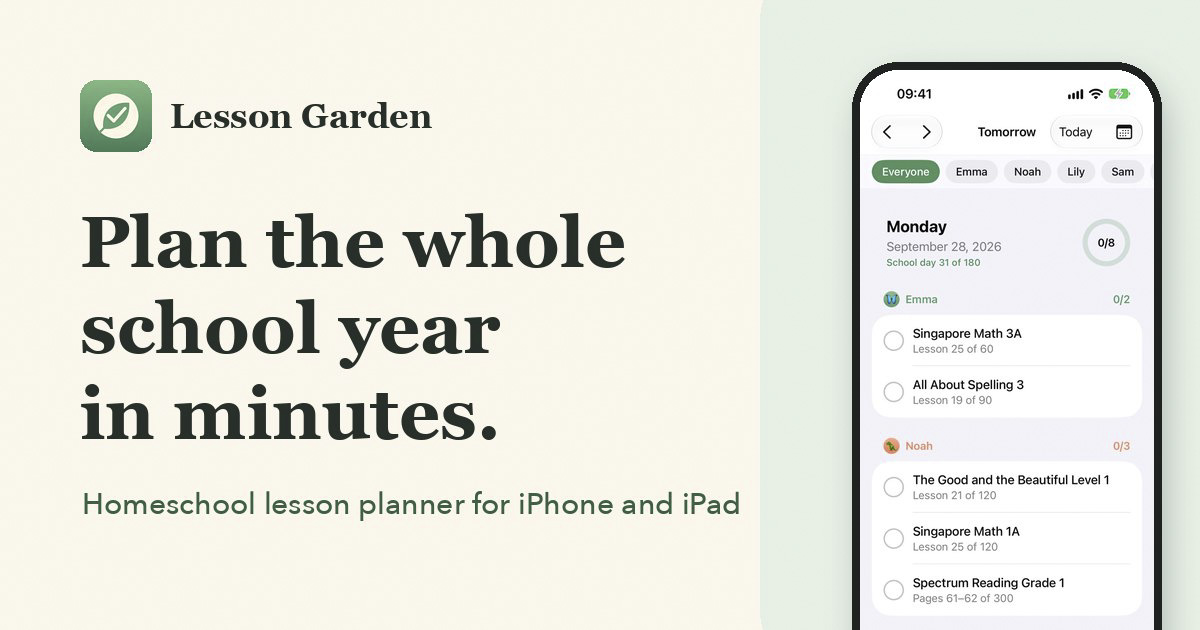
If all this dividing makes your head spin, the team behind Transcript Maker just released a new app that does it for you. Lesson Garden is a homeschool lesson planner for iPhone and iPad. You tell it how many lessons or pages are in each book, and it spreads them across your school year, around your breaks and holidays, and gives each child a simple daily checklist.
The best part for a month like October: when you miss a day, Lesson Garden moves the unfinished lessons forward and adjusts the rest of the plan automatically. No erasing, no rewriting. Every school year I purchase a paper planner and write out my lesson plans in pen. When adjustments inevitably happen, I spend a lot of valuable time and effort rewriting it! Having an app like Lesson Garden on my phone would have streamlined our homeschool planning so much!
Lesson Garden is free for up to two students, and it’s on the App Store now: lessongarden.app. And when your kids reach high school, Transcript Maker is here to turn all that hard work into a professional transcript.
For more help, the Lesson Garden website has free guides on what to do when you fall behind and the four-day homeschool week.
What about you?
As an Amazon Associate, we earn from qualifying purchases made through the Amazon links on this page. This does not affect your price or our recommendations.






Leave A Comment